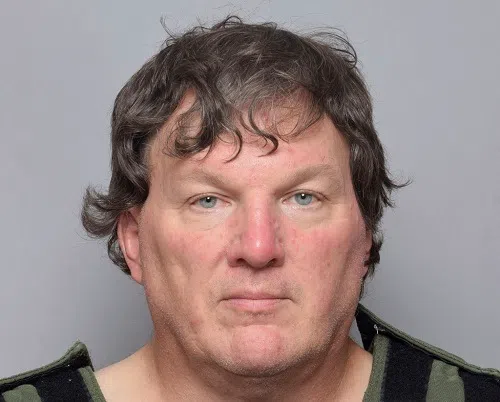
June 17, 2026:
RIVERHEAD, N.Y. (AP) — After decades waiting for justice, relatives of women murdered by New York’s Gilgo Beach serial killer laid into him Wednesday (June 17, 2026) before he was sentenced to life in prison. He told them: “I am responsible” for the crimes.
“There are no words I can say,” said Rex Heuermann, the Long Island architect who lived a secret life of violence for years before admitting he killed eight women. “The words I would say would have no meaning.”
The sentencing capped an extraordinary investigation that solved one of New York’s most perplexing mysteries. The seemingly unconnected and largely overlooked disappearances of young women became the focus of true-crime documentaries, books and podcasts after police began discovering the victims’ skeletal remains in the sandy scrub along a coastal parkway.
Heuermann, 62, will have no possibility of parole.
“A million years isn’t enough,” Violet Swager, a cousin of victim Jessica Taylor, said. “Nothing will ever make this right.”
Judge calls Heuermann ‘despicable’
As a series of victims’ kin spoke, Heuermann sat with his hands on the defense table, looking straight ahead and lightly tapping his fingers.
Then Amanda Funderburg, victim Melissa Barthelemy’s sister, commanded Heuermann to look at her. He glanced in her direction, but his eyes were slightly downcast.
“I hope you suffer,” Funderburg said as she recounted a taunting phone call she received from him days after Barthelemy disappeared. Funderburg was 15 years old.
JoAnn Mack, the mother of victim Valerie Mack, told the killer that her daughter “had dreams, and you took them all away from her.”
“Justice has been done, but it can’t replace what has been taken,” Mack said.
Heuermann pleaded guilty in April to charges that he murdered seven women: Barthelemy, Mack, Taylor, Megan Waterman, Amber Lynn Costello, Maureen Brainard-Barnes, and Sandra Costilla.
Heuermann also admitted in court to killing an eighth victim, Karen Vergata, though he was never charged in her death. He said he strangled his victims, many of them sex workers, and dismembered some of their bodies.
“Are you at least a little bit sorry for that?” Judge Timothy Mazzei asked Wednesday in an indignant voice.
Heuermann nodded and said “Yes, I am.”
“You are disgusting — a despicable man, if you are a man at all,” the judge said, his voice rising. “And you are a coward.”
As Heuermann was led away in handcuffs, spectators in the packed courtroom jeered.
Victims’ families recount a confounding loss
Liliana Waterman, who was 3 when her mom vanished, said she has been waiting her entire life to confront her mother’s killer.
“She can finally rest in peace,” Waterman said outside the courthouse. “He can’t hurt anybody else.”
Most of the women disappeared between 2000 and 2010 and their remains were all found on Long Island. Most were along Ocean Parkway near Gilgo Beach. Costilla’s remains were found in 1993 in the Hamptons, while Vergata’s remains were found in 1996 on Fire Island.
Brainard-Barnes’ two children, who were 7 and 1 when she disappeared in 2007, underscored Wednesday how her absence shaped their lives and how she never got to know the adults they became.
Her sister, Melissa Cann, sobbed deeply as she described wondering for decades if she could have done more to protect Brainard-Barnes. But, she said, that guilt is “not mine to carry. It is for Rex and Rex alone.”
Heuermann’s ex-wife and two adult children said they did not attend the sentencing out of respect for the victim’s families.
How the Gilgo Beach serial killer was caught
The case spilled into view in 2010, when investigators started to find remains along Ocean Parkway while looking into the disappearance of another sex worker, Shannan Gilbert, whose death was ultimately ruled an accidental drowning.
The case went cold until 2022, when detectives linked Heuermann to a pickup truck that a witness reported seeing when one of the victims disappeared in 2010.
Eventually, they matched DNA from a pizza crust Heuermann discarded in a Manhattan trash can to genetic material extracted from highly degraded hair fragments found on the women’s remains.
Investigators amassed other evidence, including cellphone and tracking data showing Heuermann arranged meetings with some victims shortly before their disappearances.
After Heuermann’s 2023 arrest, prosecutors recovered what they described as a “blueprint” for the killings from his computer files. Among the documents was a series of checklists with reminders to limit noise, clean the bodies and destroy evidence.
Life behind bars
Heuermann will soon be transferred to a state prison after having spent the past three years alone in a segregated cell at the Suffolk County jail, reading crime novels and striking up a brief correspondence with the infamous “Happy Face Killer.”
Calling him “a monster,” Suffolk County District Attorney Ray Tierney declared there was nothing Heuermann could say to mitigate his deeds.
“There is no doubt this defendant is sorry,” Tierney said. “He is sorry he got caught.”
Defense lawyer Michael Brown said Heuermann has shed tears, and there may be “some sincerity in his expressions of remorse.” His client appeared “as normal as they come” during their interactions, Brown said, in stark contrast with his crimes.
“He’s somewhat of a charismatic figure when you talk to him,” Brown said.
As part of his guilty plea, Heuermann has agreed to cooperate with the FBI’s behavioral analysis unit to help catch other serial killers.
June 13, 2026:
NEW YORK (AP) — The Manhattan architect who lived a secret life as the Gilgo Beach serial killer has spent the past three years alone in a segregated cell, reading crime novels and occasionally being visited by his lawyers or family, according to the sheriff who oversees the jail.
Rex Heuermann also struck up a brief correspondence with Keith Hunter Jesperson, the infamous “Happy Face Killer ” who confessed to killing eight women across the country in the 1990s, said Suffolk County Sheriff Errol Toulon.
The sheriff said it was Jesperson, who is serving multiple life sentences without the possibility of parole in Oregon, who wrote first to Heuermann at the jail in Riverhead, New York, where he’s been held since his arrest in July 2023.
Heuermann wrote back, but hasn’t responded to several follow-up missives from Jesperson, according to Toulon, who spoke to The Associated Press ahead of Heuermann’s sentencing Wednesday (June 17, 2026).
He faces life in prison without the possibility of parole after pleading guilty to murdering seven women and admitting in April that he killed yet another woman.
Toulon said “other fanatics” have also tried to reach out, but Heuermann has denied “all visits or any communication,” including from news outlets seeking interviews.
Gloria Allred, a lawyer for some of the Long Island victims’ families, dismissed Heuermann and Jesperson as “losers” and “cowards” and urged people to commit to ending violence against women.
“They both murdered someone’s daughter, someone’s mother, someone’s sister,” she said in a statement. “They chose the most vulnerable victims.”
Most of Heuermann’s victims were female sex workers whose dismembered remains were found off a remote ocean parkway near Gilgo Beach, some 50 miles (80 kilometers) east of Manhattan.
Jesperson met many of his victims while working as a truck driver. He was dubbed the Happy Face Killer because he drew smiley faces on taunting letters he sent to media and police.
Macabre reading list gives insight to mindset
Heuermann has been a voracious reader in jail, but Toulon said the inmate’s preference for violent crime and mystery novels — some about serial killers — concerns him.
Some of the works he’s recently borrowed from the jail library include J.D. Robb’s “Portrait in Death,” John Sandford’s “Secret Prey,” Heather Graham’s “Picture Me Dead,” Sue Grafton’s “N is for Noose” and Lisa Jackson’s “Chosen to Die,” according to Toulon.
“He’s not taking out sports books or cooking books, you know,” the sheriff said. “He’s choosing to read about this.”
Toulon, who was elected in 2017 after decades working for the New York City corrections department, said Heuermann’s demeanor has remained unchanged through more than 1,000 days of incarceration.
“He doesn’t seem uncomfortable in his cell,” the sheriff said. “No emotion, no despair.”
“Every time you see him, it’s the same stoic look that he has when you see him in the courtroom,” Toulon continued. “There’s no remorse.”
Days spent under close supervision
The large, hulking Heuermann is housed in a standard, 6-by-9-foot cell equipped with a metal sink, a metal toilet and a bed with a “very thin mattress,” according to Toulon.
Cells in the unit are all in view of correction officers, he said. The department also beefed up staff after Heuermann’s arrest, but purposefully did not assign any female correction officers to the unit, and no staff is allowed in unless authorized to work there.
“One of the things that we wanted to ensure when he came into our custody is that justice was served in the courts and not in our jails,” Toulon said.
Inmates in the unit are served three meals a day, all in their cells, Toulon said. There’s no common area, and they can only see the communal television through the bars of their cells.
Heuermann remains segregated anytime he leaves his cell — officers pause all other inmate movement to avoid interactions, he said.
He showers alone, and while he gets fresh air in the jail yard up to six days a week alone, he isn’t particularly active, according to Toulon.
“He does not play basketball, doesn’t do any sprints. He does not do any dips, pullups, or situps or pushups,” the sheriff said. “He just basically just walks around in circles in the yard.”
Heuermann sees visitors in a designated meeting area where his handcuffs are removed and where inmates are allowed to embrace or kiss their visitors once at the beginning and end of the meeting. He’s sat face-to-face with his ex-wife Asa Ellerup, their grown daughter Victoria, his attorneys, his therapist and a few others.
“He does not have an extensive visit list,” said Toulon.
Heuermann’s family won’t attend his sentencing
Suffolk County District Attorney Ray Tierney’s office, which is prosecuting the case, declined to comment on Heuermann’s life behind bars. Nor did his family.
His ex-wife and two grown children said through their lawyers that they won’t be attending the sentencing, where some of the victims’ families are expected to face Heuermann and deliver emotional statements.
“Out of respect for those who have endured unimaginable loss and suffering, she does not wish her presence to distract from the purpose of these proceedings,” said Robert Macedonio, Ellerup’s attorney. “Her thoughts remain with the victims and their loved ones as they continue their pursuit of justice, healing, and closure.”
April 8, 2026, update:
RIVERHEAD, N.Y. (AP) — A Long Island architect who led a secret life as a serial killer pleaded guilty on Wednesday (April 8, 2026) to murdering seven women and admitted he killed an eighth in a string of long-unsolved crimes known as the Gilgo Beach killings.
Rex Heuermann, 62, entered the pleas in a courtroom packed with reporters, police and victims’ relatives, some of whom wept as he detailed his crimes. He will be sentenced in June to life in prison without the possibility of parole.
Heuermann’s guilty pleas — to three counts of first-degree murder and four of intentional murder — bring finality to a case that bedeviled investigators, tormented victims’ relatives and tantalized a true-crime obsessed public for years. Although he wasn’t charged in her death, he also admitted that he killed Karen Vergata in 1996.
Under questioning by Suffolk County District Attorney Ray Tierney, Heuermann admitted that he strangled all eight victims and dismembered some of them, that he used burner phones to contact them, and that he wrapped their bodies in burlap before dumping them.
Wearing a black suit coat and white button-down shirt, Heuermann appeared matter-of-fact and unemotional as he answered questions from Tierney and the judge. He never looked back at the packed courtroom gallery.
The women, many of them sex workers, were killed over a 17-year span and buried in remote locations, including along an isolated beach highway across the bay from where he lived, authorities said.
Prosecutor credits the victims’ families and investigators
“This defendant walked among us play-acting as a normal suburban dad when in reality, all along, he was obsessively targeting innocent women for death,” Tierney said at a news conference hours after the hearing.
He thanked relatives of the victims, including some standing alongside him, for helping bring their loved ones’ stories to life. And he praised members of the Gilgo Beach Homicide Investigation Task Force, which cracked the case with the help of clues that included DNA lifted from a discarded pizza crust.
“He thought that by killing them, he could silence them forever and get away with murder,” Tierney said. “But he was wrong.”
Gloria Allred, an attorney for some of the victims’ families, described several of the women as young mothers who were just trying to earn extra money to support their children because they didn’t have the means to go to college or get a decent job.
“Little did they know that the defendant, Rex Hermann, did not care about their hopes and dreams, or that they had families and friends who loved them,” Allred said before calling up family members to speak directly about the case and the plea deal.
Elizabeth Baczkiel, whose daughter Jessica Taylor was murdered by Heuermann, said: “I am glad that this is over as far as him pleading guilty. It took a big chunk of stress off of me and my family.”
Fighting back tears, Missy Cann, whose sister Maureen Brainard-Barnes was murdered, said his guilty plea “brings solace” after living 19 years “in the space between heartbreak and hope.”
Killer’s ex-wife calls it a ‘difficult time’
Heuermann’s ex-wife, Asa Ellerup, and their daughter attended the hearing and were mobbed by reporters as they entered and left the building.
“My thoughts and prayers are with the victims and their families,” Ellerup said afterward. “Their loss is immeasurable and the focus should be on them at this time and moment. I ask that you give some privacy to my family as they navigate through this very difficult time.”
Ellerup and her daughter, Victoria, had no knowledge of or involvement in the killings, said their lawyer, Robert Macedonio.
Heuermann’s attorney, Michael Brown, was asked after the hearing why his client decided to plead guilty.
“There came a point in this defense where Rex said, ‘I want to plead guilty,'” Brown said, noting that one of Heuermann’s concerns was sparing the victims’ families and his own family from the ordeal of the case going to trial.
In response to a question about whether Heuermann was sorry, Brown responded, “I would hope so. … I would expect at sentencing he would have something to say.”
As part of his guilty plea, Heuermann agreed to cooperate fully with the FBI’s behavioral analysis unit.
A shocking find
The case began in earnest in 2010 after police found numerous sets of human remains while searching for a missing woman, Shannan Gilbert, along Long Island’s South Shore, setting off a search for a potential serial killer that attracted global interest and spawned a Hollywood movie. Although her relatives disputed the finding, authorities eventually determined that Gilbert drowned, and Brown said Wednesday that Heuermann “had nothing to do with Shannan Gilbert.”
Investigators used DNA analysis and other evidence to identify victims. In some cases, they were able to connect them to remains found elsewhere on Long Island years earlier.
Remains of six victims — Melissa Barthelemy, Brainard-Barnes, Amber Lynn Costello, Valerie Mack, Taylor and Megan Waterman — were found in the scrub along Ocean Parkway near Gilgo Beach. The remains of another victim, Sandra Costilla, were found more than 60 miles (100 kilometers) away in the Hamptons.
Police also identified the remains of Vergata, which were found on Fire Island, more than 20 miles (32 kilometers) west, in 1996, and near Gilgo Beach in 2011.
But despite the attention, including a documentary series and the 2020 Netflix film, “Lost Girls,” the investigation dragged on for more than a decade, punctuated by fleeting leads and dashed hopes.
A fresh look yields results
In 2022, six weeks after a new police commissioner formed the Gilgo Beach task force, detectives identified Heuermann as a suspect by using a vehicle registration database to connect him to a pickup truck that a witness reported seeing when one of the victims disappeared in 2010.
Heuermann lived for decades in Massapequa Park, about a 25-minute drive across a causeway spanning South Oyster Bay to the sandy stretch where the women’s remains were found. Some of the victims were believed to have disappeared from that community and their cellphones were found to have pinged towers in the area, authorities said.
After the truck discovery, a grand jury authorized more than 300 subpoenas and search warrants, allowing the task force to dig in to Heuermann’s life.
Detectives collected billing records for burner phones he used to arrange meetings with the victims, retested DNA found with the bodies and scoured Heuermann’s internet search history, which showed that he had viewed violent torture pornography and exhibited an intense interest in the Gilgo Beach killings and the renewed investigation. Cellphone data showed Heuermann was in contact with some victims just before they disappeared, investigators said.
To obtain Heuermann’s DNA, a task force surveillance team tailed him in Manhattan, where he worked, and watched as he threw the remnants of his lunch — a box of partially eaten pizza crusts — into a sidewalk garbage can.
Investigators rushed in, grabbed the box, and sent it to the crime lab, which matched DNA from the crust to a male hair found on burlap used to restrain one of the victims. He was arrested in July 2023.
After Heuermann’s arrest, detectives spent more than 12 days searching his yard and home, where they found a basement vault that contained 279 weapons. On his computer, investigators said, they found what they described as a “blueprint” for the killings, including a series of checklists with reminders to limit noise, clean the bodies and destroy evidence.
April 8, 2026:
RIVERHEAD, N.Y. (AP) — A Long Island architect accused in a string of long-unsolved slayings known as the Gilgo Beach killings is expected to plead guilty, closing a case that bedeviled investigators, agonized victims’ relatives and tantalized a true-crime obsessed public for years. Rex Heuermann is charged with murdering seven women, many of them sex workers. A guilty plea would put him in prison for the rest of his life. Last year, a judge rejected his bid to exclude DNA evidence obtained through advanced techniques that prosecutors say proves he’s the killer. He previously pleaded not guilty. A message seeking comment was left for Heuermann’s lawyer, Michael Brown.
Sept. 3, 2025:
RIVERHEAD, N.Y. (AP) — A New York judge on Wednesday (Sept. 3, 2025) allowed DNA evidence obtained through advanced techniques into the forthcoming murder trial of Rex Heuermann, the man accused of being Long Island’s Gilgo Beach serial killer.
New York State Supreme Court Justice Timothy Mazzei, in his 29-page ruling, concluded that experts presented by defense lawyers provided no “empirical proof to refute the validated empirical evidence“ presented by prosecutors and their expert witnesses during recent hearings and court filings.
Suffolk County District Attorney Ray Tierney said the decision marked a “significant step” in forensic DNA analysis. Prosecutors and experts have said it would be the first time advanced DNA analysis has been allowed as evidence in a New York court — and one of just a handful of such instances nationwide.
“We were able to prevail for one simple reason: The science was on our side,” Tierney said after the brief hearing in Riverhead court.
“This is where we are heading in terms of the science,” he continued. “It just mirrors all the other scientific fields that use this evidence. The criminal justice system caught up today.”
Heuermann’s attorney Michael Brown said he was disappointed in Mazzei’s decision and that his legal team has raised new arguments to get the DNA evidence excluded from trial.
In a memo filed Wednesday, they allege DNA evidence developed by Astrea Forensics violates state public health law because the California lab does not hold a required permit from New York’s health department.
“Any analysis performed by Astrea Forensics is unlawful and must be deemed presumptively unreliable,” the defense memo reads. “To hold otherwise would be to ignore and render meaningless the plain unequivocal provisions of the New York State public health law.“
Tierney said prosecutors will respond in writing but that he’s not convinced the defense’s latest argument applies as prosecutors worked with the FBI and followed national standards on DNA testing.
Mazzei said he’ll rule on the defense’s latest motion, as well as their pending request to break up the case into multiple trials, at a hearing on Sept. 23.
No trial date has been set. Heuermann appeared in court Wednesday but didn’t appear to react to the proceedings.
The 61-year-old Manhattan architect, who was arrested more than two years ago, has been charged in the deaths of seven women in a series of killings that prosecutors say stretched back at least to 1993.
Most of the women were sex workers whose remains were discovered along an isolated parkway not far from Gilgo Beach and Heuermann’s home in Massapequa.
Prosecutors say DNA analysis conducted by two separate labs using different testing methods strongly links Heuermann to the killings that haunted the New York City suburbs for years.
Mazzei’s decision pertained only to the analysis conducted by Astrea Forensics, which used whole genome sequencing to analyze highly degraded hair fragments recovered from some of the victims’ remains.
Heuermann’s lawyers argued the lab’s calculations exaggerate the likelihood that the hairs match their client’s DNA. They also complained the statistical analysis Astrea conducted was improperly based on the 1,000 Genomes Project, an open-source database containing the full DNA sequence of some 2,500 people worldwide.
But prosecutors dismissed the critique as “misguided” and a “fundamental misunderstanding” of the lab’s methods. Mazzei, in his ruling, agreed, calling the defense arguments “flawed.”
Whole genome sequencing allow scientists to map out the entire genetic sequence, or genome, of a person using the slimmest of DNA material.
While it is relatively rare in criminal forensics, the technique has been used in a wide range of scientific and medical breakthroughs for years, including the mapping of the Neanderthal genome that earned a Nobel Prize in 2022.
Prosecutors and experts say whole genome sequencing has the potential to allow researchers to generate a DNA profile of a suspect in instances where long accepted DNA techniques fall short, such as when a sample is very old or highly degraded, as is the case with the hair fragments found on the Gilgo Beach victims.
DECEMBER 17, 2024:
RIVERHEAD, N.Y. (AP) — The New York architect accused in a string of deaths known as the Gilgo Beach killings has been charged in the death of a seventh woman. Rex Heuermann was charged on Tuesday (Dec. 17, 2024) with killing Valerie Mack, whose remains were first found on Long Island in 2000. He pleaded not guilty. Twenty-four-year-old Mack had been working as an escort in Philadelphia and was last seen by her family that year in New Jersey. The investigation into the Gilgo Beach killings dates back to 2010, when police searching for a missing woman found 10 sets of human remains in the scrub along a barrier island parkway, prompting fears of a serial killer.
JUNE 8, 2024:
Extended version:
JUNE 6, 2024:
APRIL 25, 2024:
NEW YORK (AP) — Authorities investigating New York’s Gilgo Beach killings have launched a sprawling search of a wooded area on Long Island, a law enforcement official told The Associated Press.
The case has fueled national speculation after years of dead ends. Months ago, prosecutors charged a New York architect with murder in the death of four of the 11 women whose remains were found buried along a remote beach highway in 2010 and 2011.
Dozens of police canine units and officers started searching Tuesday (April 23, 2024) through woodlands in Manorville, New York, the law enforcement official said. The official was not authorized to discuss details of the investigation publicly and spoke to AP on condition of anonymity.
The Suffolk County district attorney’s office, which is prosecuting the suspect, Rex Heuermann, said only that the search related to an ongoing investigation.
“The Suffolk County Police Department, the New York Police Department and the New York State Police are working with the District Attorney’s Office on an ongoing investigation,” prosecutors said in a statement. “We do not comment on investigative steps while they are underway.”
Heuermann has pleaded not guilty. His lawyer has said Heuermann denied committing the crimes.
Investigators have insisted since Heuermann’s arrest that the probe is far from over. They said Heuermann, who lived in Massapequa Park across the bay from where the bodies were found, was probably not responsible for all the deaths. Some of the victims disappeared in the mid 1990s.
JANUARY 16, 2024, UPDATE:
NEW YORK (AP) — An architect charged in a string of slayings known as the Gilgo Beach killings was accused Tuesday (Jan. 16, 2024) in the death of a fourth woman, a Connecticut mother of two who vanished in 2007 and whose remains were found more than three years later along a New York coastal highway.
Rex Heuermann was formally charged in the killing of Maureen Brainard-Barnes, months after having been labeled the prime suspect in her death when he was arrested in July in the deaths of three other women.
In court, Heuermann wore a dark suit and did not say anything during the proceedings. He will continue to be held without bail. The judge set the next court date for Feb. 6, 2024.
Heuermann has maintained his innocence from “day one” and looks forward to defending himself in court, attorney Mike Brown said. He entered a not guilty plea on the latest charges. Brown said he is still reviewing new information presented by prosecutors in court documents Tuesday morning.
Prosecutors said Heuermann also searched the internet for phrases that suggested he was afraid of getting caught including “How does cell site analysis work,” “Gilgo news,” “How cell phone tracking is increasingly being used to solve crimes,” and phrases with the term “Long Island Serial Killer.”
Suffolk County District Attorney Raymond Tierney and other law enforcement officials planned a news conference following Tuesday’s court hearing.
Brainard-Barnes, 25, who was once employed as a dealer at the Foxwoods Resort Casino, left her hometown of Norwich, Connecticut, on July 9, 2007, and headed to Manhattan for sex work, with plans to return the following day, according to friends who became concerned when she uncharacteristically stopped using her phone.
She never came back.
Heuermann was arrested July 14 and charged with killing Melissa Barthelemy, Megan Waterman and Amber Lynn Costello, three women who authorities say also were sex workers. Heuermann’s lawyer said he has denied committing the crimes. He previously pleaded not guilty to killing Barthelemy, Waterman and Costello.
Brainard-Barnes was the first of the four women to disappear. Their remains were found along the same quarter-mile (400-meter) stretch of parkway in the Gilgo Beach area of Jones Beach Island in 2010. Additional searching turned up the remains of six more adults and a toddler who was the child of one of the victims.
Police concluded that an 11th person found dead in a tidal marsh on the same barrier island accidentally drowned.
Investigators have said Heuermann, who lived in Massapequa Park across the bay from where the bodies were found, was probably not responsible for all the deaths. Some of the victims disappeared in the mid 1990s.
Investigators zeroed in on Heuermann when a new task force ran an old tip about a Chevy Avalanche pickup through a vehicle records database. A hit came back identifying one of those make and models belonging to Heuermann, who lived in a neighborhood police had been focusing on because of cellphone location data and call records, authorities said.
With the tip breathing new life into the investigation, authorities charted the calls and travels of multiple cellphones, picked apart email aliases, delved into search histories and collected discarded bottles — and even a pizza crust — for advanced DNA testing, according to court papers. Detectives said Heuermann’s DNA on the pizza crust matched a hair found on a restraint used in the killings.
Police said other evidence linked Heuermann to the victims, including burner cellphones used to arrange meetings with the slain women.
After the arrest, investigators spent nearly two weeks combing through Heuermann’s home, including digging up the yard, dismantling a porch and a greenhouse and removing many contents of the house for testing.
Investigators found hundreds of electronic devices during their lengthy search of Heuermann’s home, according to court documents released Tuesday. Prosecutors say the devices contained a collection of bondage and torture pornography.
JANUARY 16, 2024:
RIVERHEAD, N.Y. (AP) — Prosecutors say they are planning a major announcement in their investigation of the suspected serial murders of a group of women whose bodies were found strewn along a coastal highway near Long Island’s Gilgo Beach.
The prime suspect in some of those killings, Rex Heuermann, is due in court Tuesday (Jan. 16, 2024), months after he was charged in the deaths of three women. Prosecutors had also said they were working to charge him with a fourth slaying.
Suffolk County District Attorney Ray Tierney is set to make the announcement after a court hearing in the case in Riverhead, New York.
Heuermann was charged in July with the killings of Melissa Barthelemy, Megan Waterman and Amber Costello, whose bodies were found buried along a remote beach parkway. Prosecutors said Heuermann is also suspected in the death of Maureen Brainard-Barnes, who vanished in 2007.
He has pleaded not guilty and has been held without bail at Suffolk County Jail in Riverhead.
The arrest of Heuermann, a 60-year-old architect, came more than a decade after police searching for a missing woman found 10 sets of human remains hidden in the thick underbrush near Gilgo Beach.
The deaths had long stumped investigators and fueled immense public attention on Long Island and beyond, with the killings leading to the 2020 Netflix film “Lost Girls.” Authorities suspected that a serial killer committed some of the slayings but have said they don’t believe all the victims were killed by the same person. The majority of the killings are still unsolved.
Heuermann was first identified as a suspect in 2022 when detectives linked him to a pickup truck that a witness reported seeing when one of the victims disappeared.
The following year, detectives tailing Heuermann recovered his DNA from pizza crust in a box that he discarded in a Manhattan trash can and matched it to a hair found on a restraint used in the killings, authorities said.
Heuermann had worked as a licensed architect with a Manhattan-based firm and lived in Massapequa Park, a suburb close to the spot where the bodies were found.
AUGUST 4, 2023:
Extended version:
JULY 18, 2023:
MASSAPEQUA PARK, N.Y. (AP) — Detectives investigating the long-unsolved slayings known as the Gilgo Beach killings have searched a storage facility in the Long Island community of Amityville over the weekend. Suffolk County police confirmed Monday (July 17, 2023) that detectives executed a search warrant at Omega Self Storage on Sunrise Highway. The search is related to the investigation that led to last week’s arrest of architect Rex Heuermann. He was charged Friday with murder in the deaths of three of the 11 victims whose remains were found buried along a remote beach highway. Heuermann’s attorney says his client denies committing the crimes. A message seeking comment was left with managers at the storage facility.


Comments