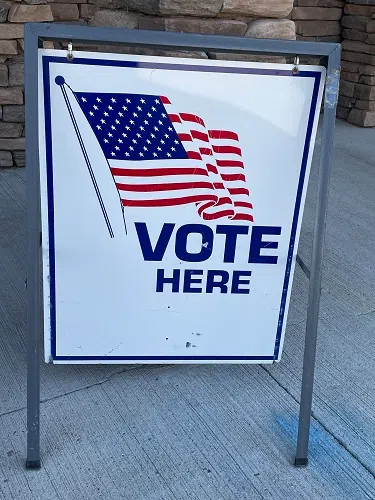
Ahead of the June 2, 2026, Primary Election, Secretary of State Monae L. Johnson would like to remind voters of the safeguards and security built into South Dakota’s election processes.
In order to ensure the integrity of its elections, South Dakota does NOT have online voter registration. When a person registers to vote, local county auditors review the information provided before their registration is official. A person MUST be a U.S. citizen to register to vote. All voters go through numerous checks to ensure they are actually eligible to vote.
South Dakota has strong voter ID laws to ensure the integrity of its elections. Voters must be verified BEFORE casting a ballot. South Dakota requires a photo ID at the polls and on absentee ballot request forms. Voters must present one of the following photo IDs: a South Dakota driver’s license or nondriver ID card, a U.S. government photo ID (e.g., a passport), a U.S. Armed Forces ID, a tribal ID, or a student ID card issued by a high school or college in South Dakota. If a voter does not have an acceptable ID, they must be given the opportunity to sign a personal ID affidavit in which the voter states under the penalty of perjury that they are the person they have declared they are.
ONLY paper ballots are used in South Dakota. South Dakota does NOT allow ballot drop boxes. Marked ballots are placed into a sealed and secure locked ballot box that is delivered by two poll workers of different political parties to the county auditor’s office after the polls are closed. All ballots are removed from the ballot box in public view and put into the tabulating machine, which is NOT connected to the internet. All machines are publicly tested prior to election day.
“We require photo ID, conduct post-election audits, do not connect our tabulating machines to the internet, only use paper ballots, and encourage South Dakotans to volunteer as poll observers and work as election workers,” stated Secretary Johnson. “These measures ensure that South Dakota continues to have safe and secure elections.”
County Auditors will also be conducting post-election audits. State law calls for an audit that reviews voted ballots in five percent of voting precincts, comparing the paper record to the results produced by the voting system. The post-election audits in South Dakota will be conducted manually by hand-counting. The post-election audit process will thoroughly review procedures performed before, during, and after the conduct of an election. “Post-election audits promote transparency and help verify election results while also demonstrating that tabulators are working accurately and efficiently,” said Secretary Johnson.


Comments