The South Dakota Housing for the Homeless Consortium, an affiliate of South Dakota Housing, conducted its annual statewide Point-in-Time homeless count and Housing Inventory Count in January (Jan. 23, 2024).
The results of the PIT are significantly impacted by the availability of partners who can conduct these surveys in their communities. Isolating data by geographic regions other than Rapid City or Sioux Falls tends to give an incomplete picture of the state of homelessness in South Dakota. Rural regions of South Dakota are often undercounted because of a lack of service providers and partners to conduct surveys.
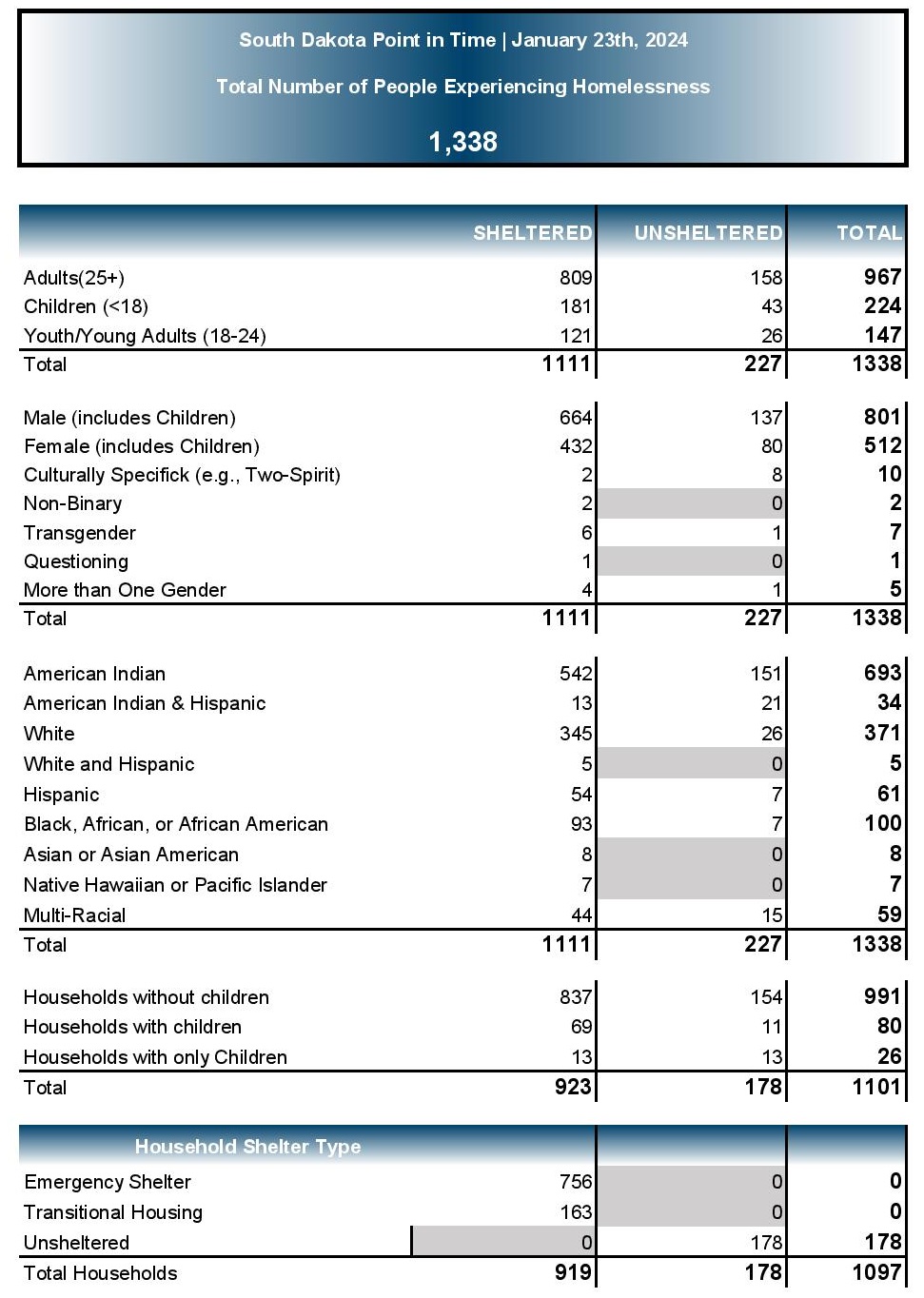
Of the 1,338 people who were experiencing homelessness on Jan. 23, 2024:
-
801 men and boys were counted compared to 512 women and girls;
-
17% of respondents were in unsheltered situations on the day of the PIT. A decrease from 24% in 2023;
-
11% of respondents were between the ages of 18-24, an increase from 8% in 2023 and 7% in 2020. This mirrors national trends indicating youth becoming one of the fastest growing demographics experiencing homelessness;
-
7% of households surveyed had children in them. A decrease from 8% in 2023 and 11% in 2020. South Dakota continues to make great strides in reducing homelessness among children;
-
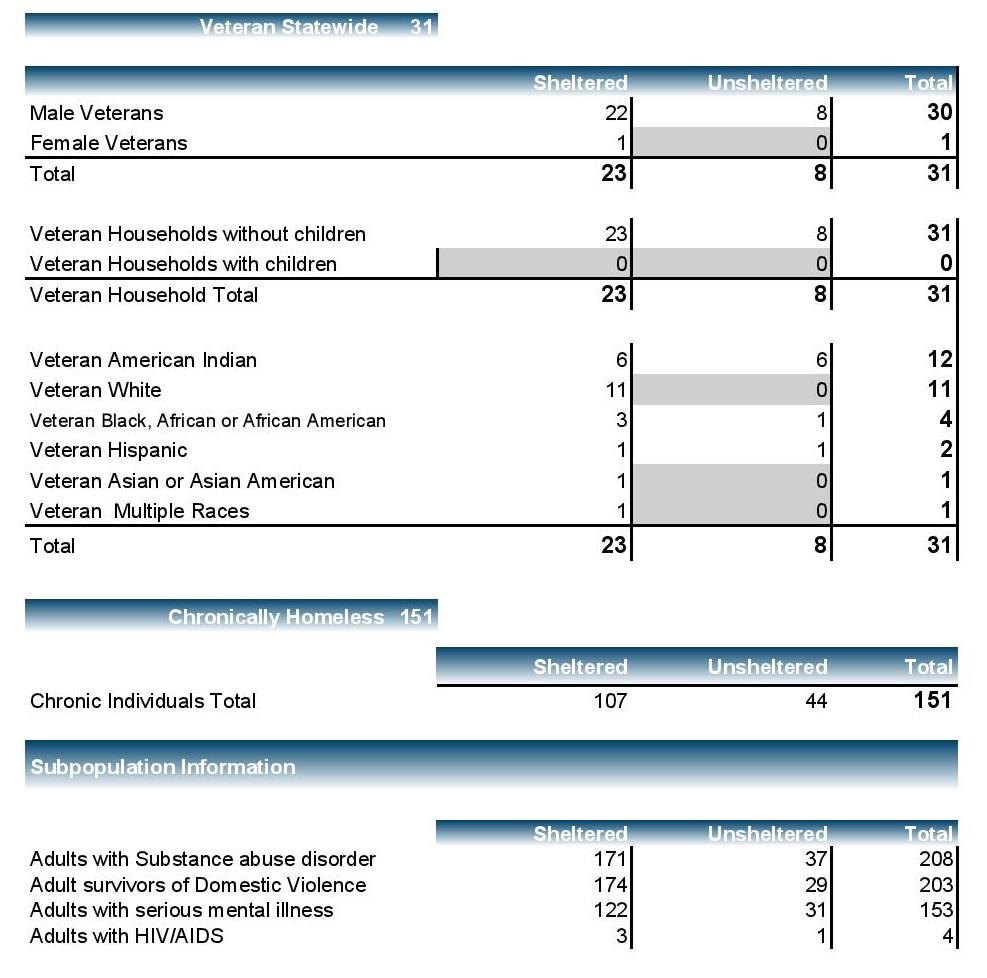
There were 31 veterans experiencing homelessness in 2024, a decrease from 58 in 2023;
-
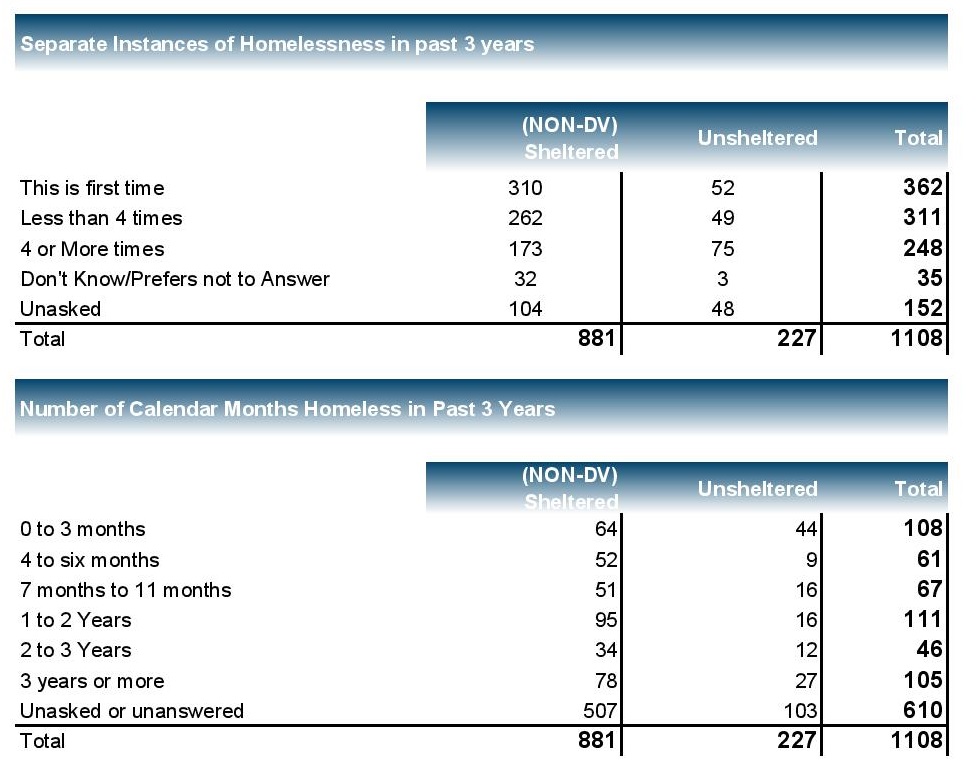
38% of respondents were experiencing homelessness for the very first time. 70% of respondents had fewer than 4 instances of homelessness in the past three years; and
-
14.2% of respondents were experiencing homelessness due to domestic violence, compared to a three-year average of 11.3%. This can be attributed to greater inventory to provide shelter to these survivors and more participation in the PIT count among DV agencies.
The count was conducted within a 24-hour period and includes everybody staying in public and private shelters, including domestic violence shelters, transitional housing or motels paid for by an agency, and unsheltered individuals who are staying in vehicles, on the streets or in places not meant for human habitation.
The PIT count is a crucial source of annual data that can show characteristics of people who are experiencing homelessness. Data from the count is used to measure homelessness on local, state, and national levels. Due to a variety of factors that impact the count, the PIT numbers can change drastically from year to year.
Additional information and numbers specific to Sioux Falls and Rapid City can be found at housingforthehomeless.org.


Comments