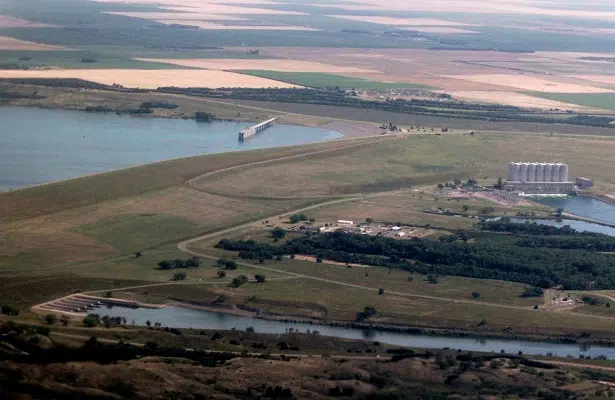
OMAHA, Neb. — The U.S. Army Corps of Engineers has completed a risk assessment of Oahe Dam on the Missouri River near Pierre, South Dakota, and is initiating a multi-year Dam Safety Modification Study to identify and evaluate long-term measures for strengthening the dam’s performance during rare, extreme flood events.
The study is the next step in the USACE Dam Safety Program process and builds on risk reduction work already completed and underway at the dam.
There is no current emergency at Oahe Dam, and nothing changes for downstream residents today. Oahe is one of six Missouri River mainstem dams, along with Fort Peck, Garrison, Big Bend, Fort Randall and Gavins Point, that USACE operates as a single, integrated system under the Missouri River Mainstem System Master Water Control Manual. Releases from each dam are coordinated across the system to serve its authorized purposes, and no operational changes are planned at Oahe or any other mainstem dam as a result of the assessment or the updated risk classification.
USACE operates, monitors and inspects the dam year-round. Any public protective action decisions are the authority of state and local emergency management officials, who would be notified immediately if any issue ever required urgent action.
USACE periodically assesses risk at each of its dams by evaluating the hazards a dam may face, how the dam performs under those hazards and what the consequences would be if performance were compromised
“Oahe Dam has performed as designed for more than six decades, and it is performing that way today,” said Col. Joe Sahl, commander of USACE Omaha District.
“The updated assessment gives us a sharper understanding of the risk drivers we have been managing all along and a clear path for investing in this critical infrastructure for the next generation.”
Based on the assessment, USACE has updated its internal risk classification for Oahe Dam from “high risk” to “very high risk.” The classification is a tool USACE uses within its Dam Safety Program to prioritize resources and drive action across its portfolio of more than 700 dams. It means Oahe Dam will receive the highest level of attention and investment. It does not indicate a current emergency and does not initiate emergency response actions.
The Dam Safety Modification Study is now among the highest priorities in the USACE Dam Safety Program. The study will identify and evaluate potential long-term risk management measures in coordination with state and local partners and Tribal Nations and with opportunities for public input, select a plan and complete detailed engineering and design, and move to implementation. USACE will share information as the study proceeds.


Comments