
As America marks its 250th anniversary, the U.S. Census Bureau invites educators to bring history to life through data-driven resources that explore our nation’s people, places, and progress. In commemoration of this milestone, these materials highlight the importance of the decennial census and the role demographic and economic data play in understanding the United States over time. Educators in the classroom or at home can engage students in exploring America’s story through activities, lessons, and interactive resources connected to the nationwide celebration of America’s 250th anniversary.
Special Edition: Celebrating 250 Years of America Fun Facts

As part of the Freedom 250 celebration, the Census Bureau highlights its role in recording the nation’s story, including data on the populations of famous U.S. landmark locations, places to celebrate America’s 250th birthday, and more.
Welcome to The District: Test Your Knowledge on Our Nation’s Capital

Are there more candy and nut stores than dentist offices in our nation’s capital? Do girls outnumber boys? Test your knowledge on the District of Columbia and learn about topics like the median household income, D.C. residents with a bachelor’s degree, percentage of D.C. households with a computer or smartphone, and more.
Then and Now: A Look Back at the 1950 Census
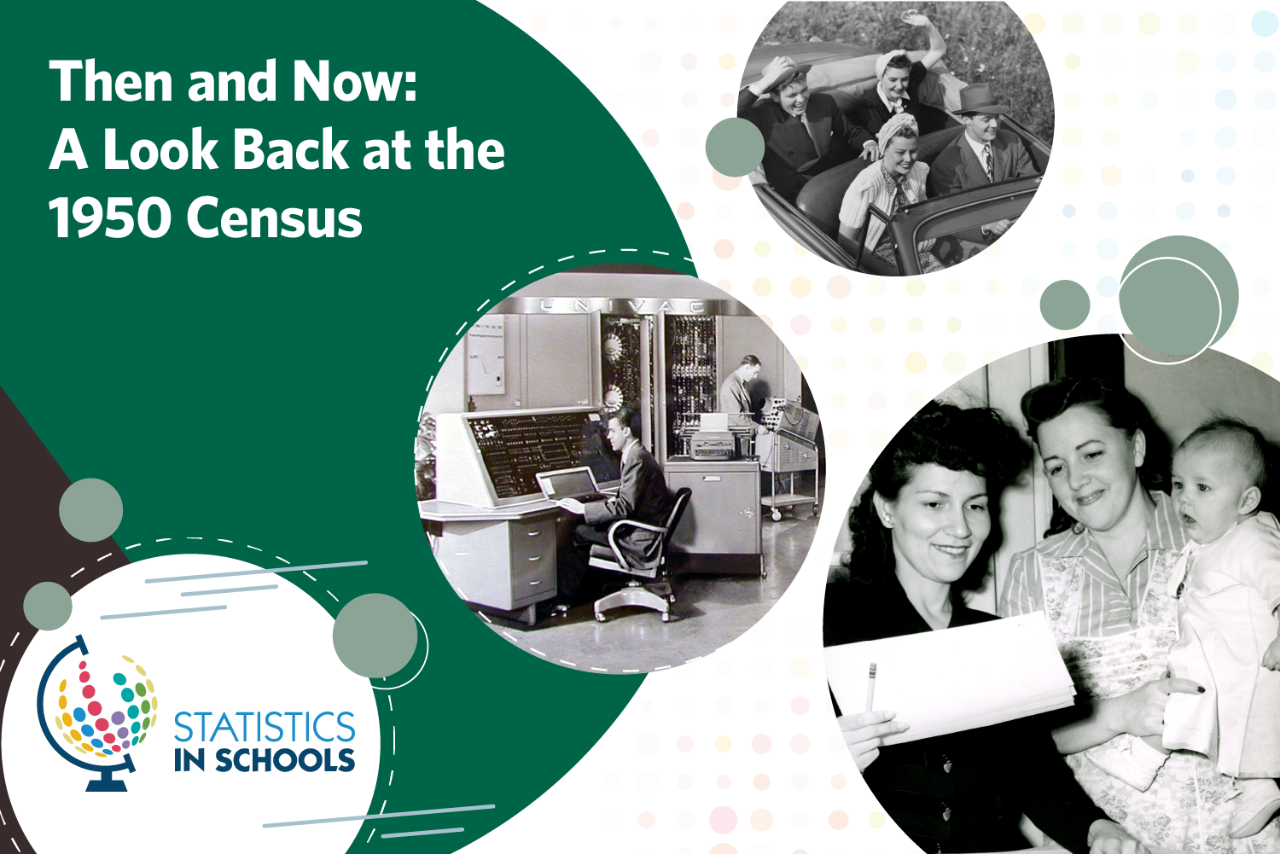
Have you ever wondered what the U.S. population was in 1950? What about how many women were in the workplace or the average family income? Learn more about U.S. life in the 1950s with our “Then and Now” game comparing life then with life today.
Exploring the 1950 Census Fun Facts
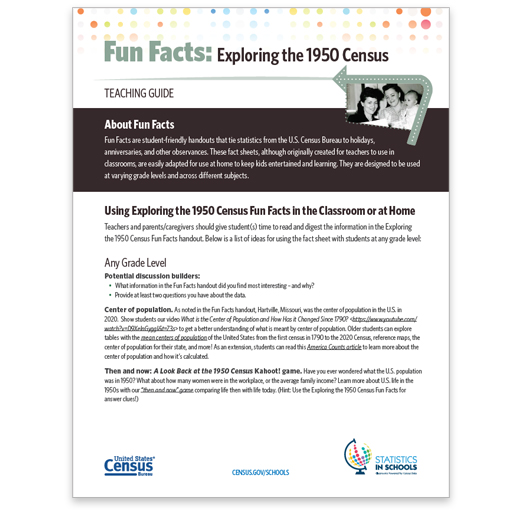
Step back in time with this special edition Fun Facts for the 1950 Census. This handout offers a range of statistics about American life in the 1950s. Students can use it to compare kid-friendly statistics from the 1950 Census with corresponding information from the 2020 Census.
Classroom Activities
These activities for grades 4-12 were curated specifically to teach students about how Census Bureau data has reported changes in America over time. They will examine infographics and graphs on earnings, population, education, and voting, explore data about their state, and analyze socioeconomic and demographic changes through the decades. Each has a teaching guide to help instruct the activity.
-
America Then and Now – Interpreting Changes in Demographic DataStudents will review a series of infographics to learn how America’s demographics have changed between 1940 and 2010.
-
Narratives and NamesStudents will examine Census Bureau data on popular last names and complete a Quickwrite about their name and its history.
-
Numbers That Tell a StoryStudents will use State Facts for Students to explore data about their state and voice their opinions on how the population has changed over time.
-
Authorizing the First Census – The Significance of Population DataStudents will analyze excerpts from the 1790 legislation that allowed for the administration of the first decennial census.
-
Voting Trends in America, 1964-2020Students will analyze bar and line graphs showing the percentages of people who voted in elections between 1964 and 2020.
-
Women in the Workforce 1940-TodayStudents will examine graphs on education, earnings, and workforce participation for men and women between 1940 and today.
-
How is Young Adulthood Changing?Students will engage in a class discussion on young adulthood, answer questions about a technical document, then write about their generation.
-
Examining Changes to the Environment Through Pictures and DataStudents will examine how human actions and population changes can affect the environment.
-
How Times Have Changed: An Analysis of Young AdultsStudents will look at data showing how the experiences of young adults today differ from other generations.
Additional Resources
What is Constitution Day?
On February 29, 1952, Congress designated September 17 as Constitution Day and Citizenship Day. This day commemorates the signing of the U.S. Constitution on September 17, 1787, and recognizes all American citizens.
Each Constitution Day gives us a chance to learn about and understand the importance of what our Founding Fathers envisioned for our country, one of those things being an accurate count of our nation’s people. Thus, they included a mandatory count of the population every 10 years (decennial census) in the Constitution. Article I, Section 2 states: “Representatives and direct Taxes shall be apportioned among the several States which may be included within this Union, according to their respective Numbers….”
Constitution Day Fun Facts
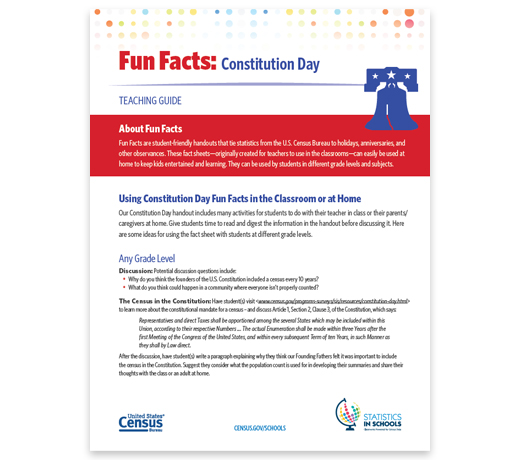
As the nation celebrates Constitution Day, it’s a good time to reflect on how our Founding Fathers enshrined in our Constitution the importance of statistics as a vital tool for measuring people, places, and economy. Interact with students using this handout that shares real census data related to Constitution Day. Then, view the teaching guide for ideas on how this fun facts handout can be used as a classroom activity.
Exploring American History and the Constitution with Census Bureau Data
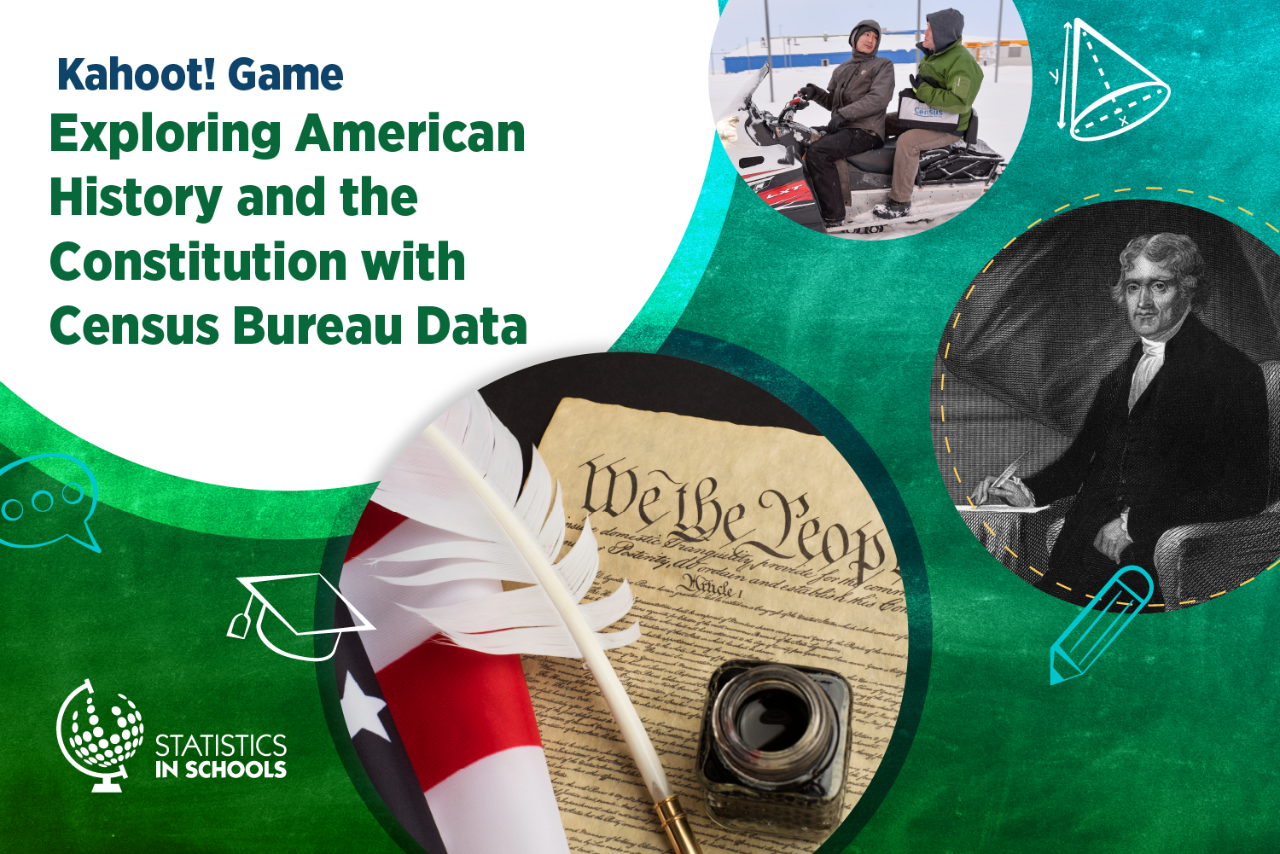
Did you know the U.S. population was 2.5 million in 1776? It has grown more than 130 times larger today at over 330 million! Play this Kahoot! to discover historic data gems about America’s population, how the once-a-decade Census count relates to the U.S. Constitution, and more student-friendly statistics that illustrate the importance of census data in our ever-changing world.


Comments